Top Guitar Effects Pedals for Every Musician
- Tom Miles
- May 12
- 4 min read

Guitar effects pedals can transform your sound, adding depth, texture, and creativity to your music. Whether you're a seasoned pro or just starting out, understanding which pedals to incorporate into your rig can be a game-changer. In this post, we will explore some of the best guitar effects pedals available, helping you find the right tools to elevate your playing.
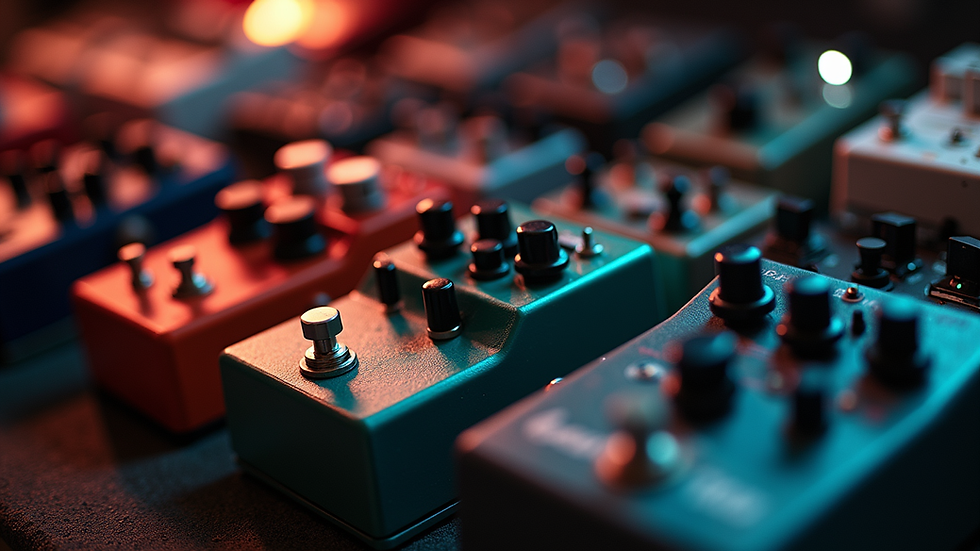
Understanding Guitar Effects Pedals
Before diving into specific pedals, it’s essential to understand what guitar effects pedals do. These devices modify the sound of your guitar signal, allowing you to create unique tones and effects. They can be categorized into several types, including:
Distortion/Overdrive: These pedals add grit and sustain to your sound, making them perfect for rock and blues.
Modulation: This category includes effects like chorus, flanger, and phaser, which add movement and depth to your tone.
Delay: Delay pedals create echoes of your sound, allowing for complex layering and atmospheric effects.
Reverb: Reverb pedals simulate the sound of different environments, adding space and ambiance to your music.
Compression: These pedals help to even out your dynamics, making quiet sounds louder and loud sounds quieter.
Understanding these categories will help you choose the right pedals for your musical style.
Essential Pedals for Every Guitarist
1. Boss DS-1 Distortion
The Boss DS-1 is a classic distortion pedal that has been a favorite among guitarists for decades. Its simple controls allow you to dial in everything from a light crunch to a heavy distortion, making it versatile for various genres.
Key Features:
- Three simple controls: Tone, Level, and Distortion
- Durable construction
- Classic sound used by legends like Kurt Cobain and Joe Satriani
2. MXR Phase 90
The MXR Phase 90 is a staple in the modulation category. This pedal creates a swirling, phase-shifting effect that can add richness to your sound. It’s particularly effective for solos and clean tones.
Key Features:
- Single knob for easy operation
- Analog circuitry for warm tones
- Used by guitarists like Eddie Van Halen
3. TC Electronic Hall of Fame Reverb
Reverb is crucial for adding depth to your sound, and the TC Electronic Hall of Fame is one of the best options available. With multiple reverb types, this pedal can simulate everything from a small room to a grand hall.
Key Features:
- TonePrint technology for customizable sounds
- Compact design
- High-quality reverb algorithms
4. Electro-Harmonix Holy Grail Nano Reverb
Another excellent reverb option is the Electro-Harmonix Holy Grail Nano. This pedal is known for its lush reverb sounds and simple interface, making it a favorite among guitarists who want quality without complexity.
Key Features:
- Three reverb types: Spring, Hall, and Flerb
- Compact size
- True bypass switching
5. Line 6 DL4 Delay Modeler
The Line 6 DL4 is a powerful delay pedal that offers a wide range of delay types, from simple echoes to complex looping capabilities. This pedal is perfect for guitarists looking to experiment with sound layering.
Key Features:
- 15 different delay models
- Looping capabilities
- Durable design with a user-friendly interface
Choosing the Right Pedals for Your Style
When selecting guitar effects pedals, consider your musical style and the sounds you want to create. Here are some tips to help you choose:
Identify Your Genre: Different genres often require different effects. For instance, if you play metal, you might prioritize distortion and noise gates, while blues players may focus on overdrive and reverb.
Start Simple: If you're new to effects pedals, start with one or two essential pedals and gradually expand your collection.
Experiment: Don’t be afraid to try out different pedals. Many music stores offer rental options, allowing you to test pedals before purchasing.
Building Your Pedalboard
Once you’ve selected your pedals, it’s time to build your pedalboard. Here are some tips for organizing your setup:
Power Supply: Ensure you have a reliable power supply to keep your pedals running smoothly. Consider using a power brick to avoid clutter.
Signal Chain: The order of your pedals can significantly affect your sound. A common signal chain is: tuner → distortion → modulation → delay → reverb.
Space Management: Use a pedalboard that fits your needs. If you have many pedals, consider a larger board with enough space for future additions.
Maintenance and Care for Your Pedals
To keep your pedals in top condition, follow these maintenance tips:
Regular Cleaning: Dust and debris can affect performance. Clean your pedals regularly with a soft cloth.
Check Connections: Ensure all cables and connections are secure to avoid signal loss.
Store Properly: When not in use, store your pedals in a cool, dry place to prevent damage.
Conclusion
Guitar effects pedals are essential tools for any musician looking to enhance their sound. By understanding the different types of pedals and how to use them, you can create a unique tone that reflects your musical style. Start with a few essential pedals, experiment with your setup, and enjoy the creative possibilities that come with using effects pedals.
Now that you have a solid understanding of the top guitar effects pedals, it’s time to explore and find the perfect combination for your sound. Happy playing!


Comments